Monday, December 9, 2013

Mexico leaves Indigenous People in the Mud

Large amounts of rainfall produce weak slope faces, which can result in slope failures such as seen above. 
          Tropical Storm Manuel made landfall in late September but many rural villages of Mexico still are feeling the effects and devastation. Many forced from their homes that are now filled with feet of mud are living under tin roofs open to the elements. Since many of these villages are indigenous people, socioeconomic standing is virtually non-existent. With no way to fund efforts to recover from the storm, villagers make do with the higher ground available, a cemetery.

Makeshift homes of tin and plastic tarps were set up to shelter those who lost their homes and possessions.
          Recovery efforts were focused on wealthy, high traffic areas of the region leaving the smaller villages to rely on food and resources from nearby villages. Deprivation to indigenous people of Mexico is not a recent creation. For years, the Mexican government has ignored the more than 10% of its population. 30% of indigenous people are illiterate and nearly 90% have no access to medical care or even running water. This is without a disaster. In general, people of low socioeconomic status are more vulnerable to hazards due to the lack of these resources and commonly they are living in sub-par conditions. Sadly, the most attention given to these areas are when a disaster does occur, but more than media coverage is necessary to help these people.

     For more information visit:

Slippery Origins of 2011 Japan Tsunami

           
Resulting landscape from 2011 earthquake that sent 30ft tsunami crashing into the coast of Japan
          In 2011, a magnitude 9.0 earthquake was recorded 80 miles off the coast of Japan and 18.6 miles below the ocean floor. The sudden change in the ocean floor sent a series of waves with the largest at 33ft high crashing into the coast of Japan surging as far as 6 miles inland. Scientists now know the exact cause of the largest earthquake in the region on record and the culprit of regional disaster. The earthquake some 18 miles under the ocean floor was caused by a fault slip. A fault slip is the term used when one tectonic plate suddenly slides in relation to the other due to pressure build-up.
A fault slip occurs from a release of built up pressure at a plate boundary and results in a horizontal plate motion.
 
          The slip occurred in the Japan Trench at the boundary of the North American Plate (where Japan is located) and the Pacific Plate. Scientists report that the plate slid as much as 164 feet causing the surrounding water to swell creating the deadly tsunami. Typically slips are minor and don’t result in devastating tsunami; however, the geologic depositions of clay on the ocean floor allowed the fault to become slippery from saturation allowing such a large movement in the boundary to be possible.
 
     For more information please visit:
 

How Forecasting Saved Lives

          When it comes to avoiding environmental disasters, technology plays an important role. The development of Doppler radar and other surveying techniques has allowed the field of Meteorology to blossom and become an important tool in saving lives. In the case of tornadoes, an individual’s adherence and seriousness to watches and warnings are key in preventing injuries. Improved technology has allowed tornado “watches” to be issued for those areas that may be in the direct path of a tornado that has yet to form. 
Tornadoes are unpredictable due to drafts and wind patterns. Early warnings can be difficult but extremely important if near densely populated areas.
           Due to the unpredictability of tornadoes, however, these “watches” are often discarded and forgotten. A watch could then develop into a warning if an actually tornado is spotted on or near the ground. This is when people respond but depending on the characteristics of the tornado, the time it takes to take cover may be too long. In an area such as the Midwest and plains of the US that experience frequent tornadoes, early warning systems are most important to help alert large populated areas to prepare for the storm. As technology advances, so do these detection systems; however, it is up to the people to heed the warnings and take appropriate action.

           For the full article visit: How Improved Tornado Forecasting Saved Lives in the Midwest

Wednesday, November 20, 2013

Typhoon Haiyan


Devastation after Typhoon Haiyan November 8, 2013 in the Philippines
                Within only a week after an earthquake, the Philippines were battered by Typhoon Haiyan, forecasted to be one of the worst storms in history, and it didn’t disappoint. With 134mph winds with gusts up to 155mph, Typhoon Haiyan hit with the strongest winds and force of the year. People heeding warnings and fled to storm shelters reducing the death toll but still an imaginable 3,982 people have been killed with 1,602 missing. The number of casualties may never be known exactly since not only the direct impact of the storm was devastating but the lack of shelter and now threat of disease are looming in communities. Psychologists are concerned for the survivors many who are now homeless and have to live in a state of chaos for months as well as those people who have been assigned the task of cleaning debris and bodies from the streets. Not all communities are in low spirits. The determination to rebuild and push through the tragedy fuels the community of Daanbantayan on Cebu Island. Of the 80,000 people who live in the province only 9 were killed, but 90% of homes were destroyed. With the help of outside sources, the process of returning to normal has started but will take much time to reach.


US troops work to deliver relief supplies to villages around the Philippines

          Not every province was as lucky as Daanbantayan. Several evacuation shelters failed as the storm blew through the islands, removing the one security many had thought was impervious. Governmental dismay after the storm has also slowed recovery efforts and morale but help in the form of supplies and friends keep pouring in from around the globe.

To look at why Typhoon Haiyan impacted the Philippines so hard please follow this link:

For more information and the complete articles visit:

Monday, October 21, 2013

Land Down Under is Under Smoke

Firefighters work to contain blazes throughout Australia
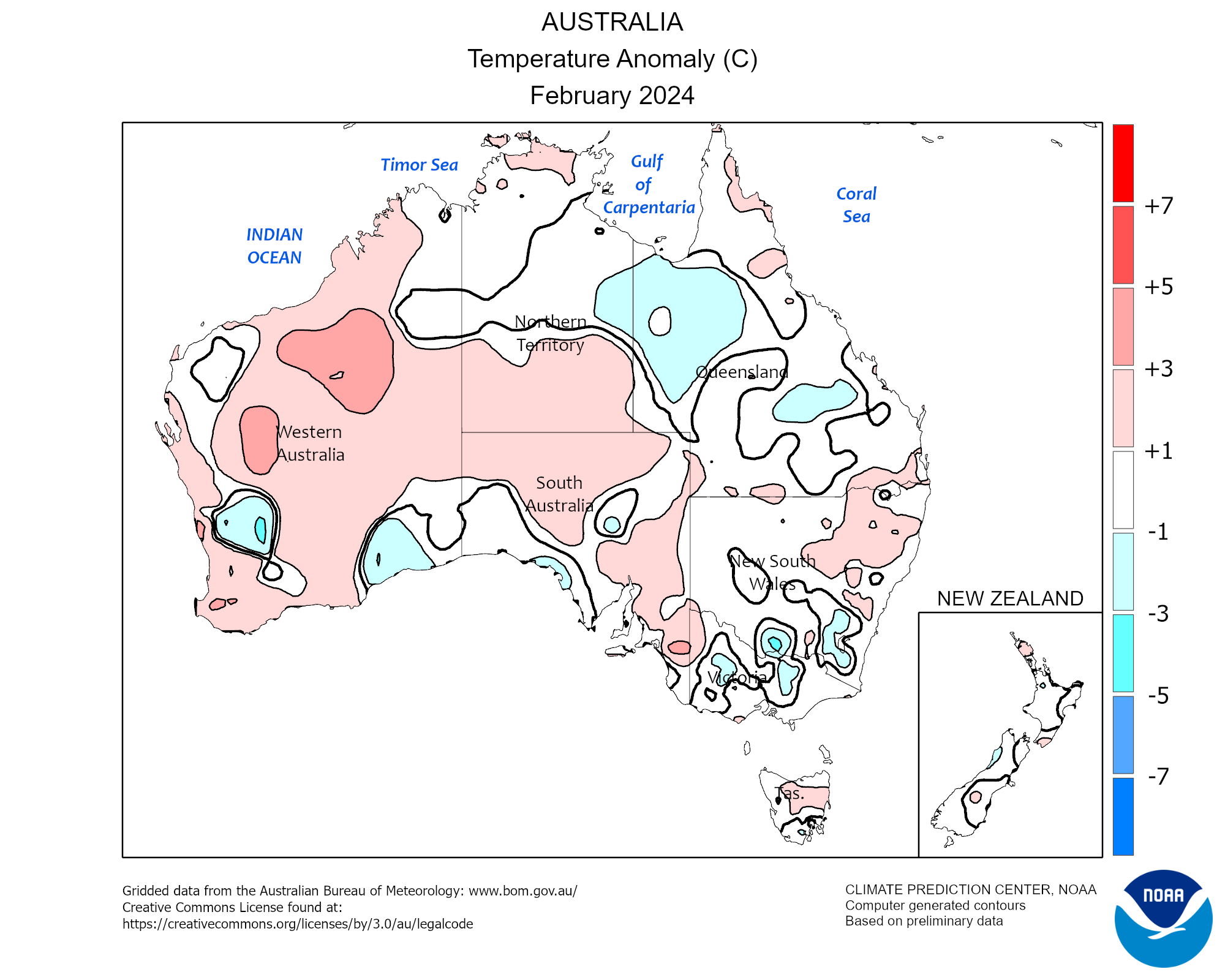
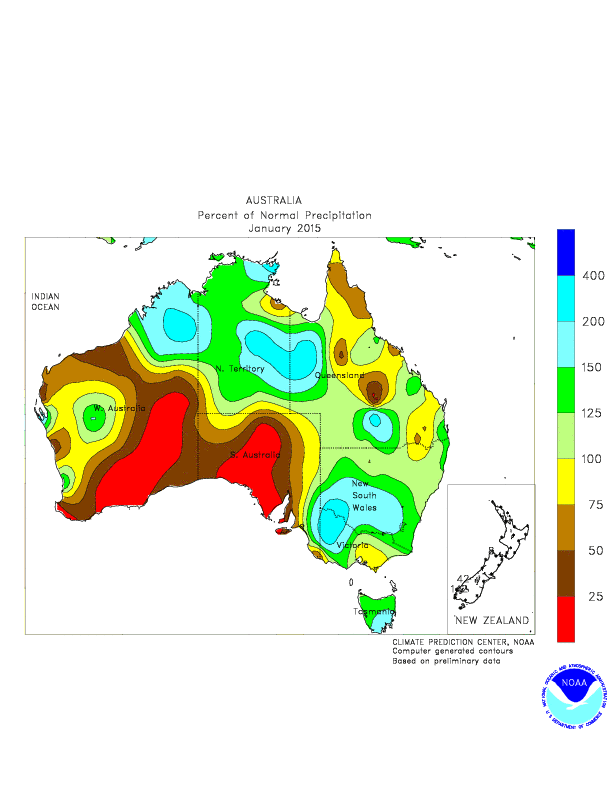
     Wildfires are raging through the outback of Australia and gaining strength. Firefighters and officials fear that if fires keep growing, Sydney is in the path of destruction. Due to higher than average temperatures, lower than normal precipitation and high winds, the countryside of Australia has turned into a giant tinder box making conditions the worst in 40 years.
 
Clouds of smoke fill the Sydney skyline
     Hundreds of houses have already been destroyed leading to a declaration of emergency by the government. Mandatory evacuations have been issued in threatened areas while firefighters work diligently to suppress blazes. One firefighter while working to save other houses from flames, lost his own. Only one casualty has been reported while officials say 15 blazes remain out of control.  
 
     For an up-to-date map of advisories and warnings, please visit:
          Australia's Bushfires
     More information can be found here:

Sunday, October 13, 2013

Slick Wheat Farmer Discovers Oil Spill

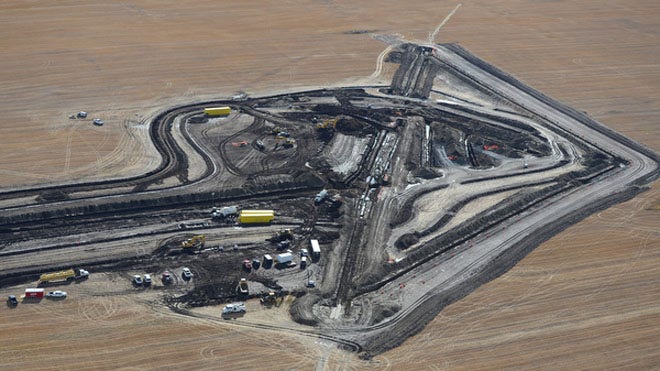
Containminated soils around the spill are being dug and removed from the area
 
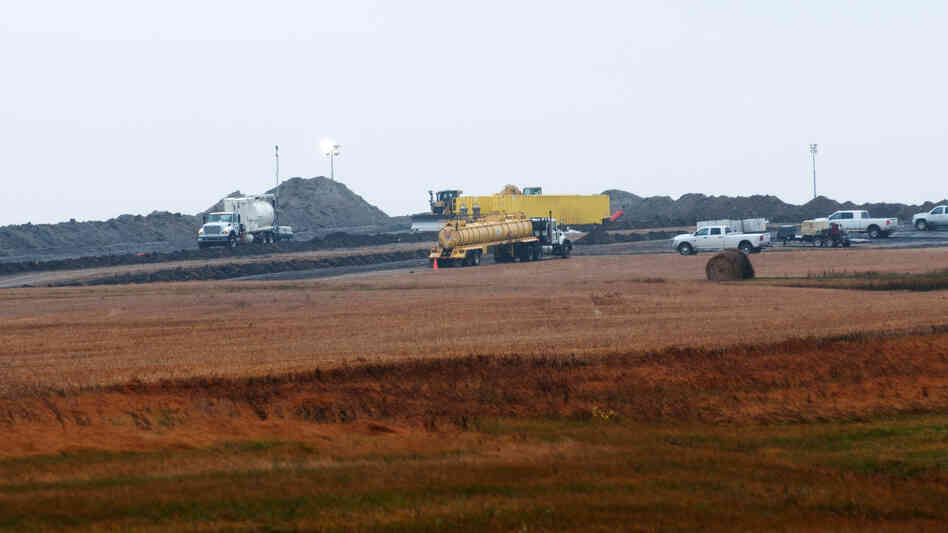
Yesterday, a local wheat farmer near Tioga, North Dakota discovered an oil spill covering his crops and ruining his land for years. After an inquiry by Associated Press, it was discovered that the spill actually occurred 11 days prior and was not reported to the public. The spill was estimated to be  20,600 barrels of oil at an estimated price of nearly a million dollars. 
Crews work to remove contaminated soil from fields.
The state was properly notified within a day of the spill but no official public announcement was released.  Pipeline ruptures are sensitive in the public eye with the push to install the Keystone XL oil pipeline to carry oil from Canada to Oklahoma. Risk of a spill over the plains of North America could endanger the quality of one of the largest most crucial aquifers in the country. In many oil rich states, pipeline failures are not reported to the public, only to the state. The residents of these areas should be aware of the possible risks they are exposed to from the pipelines and should not have to discover a spill by chance. 


Wednesday, September 25, 2013

Pakistan gets Pummeled by 7.7 Earthquake

An Awaran, Pakistan home after a 7.7 magnitude earthquake
At least 327 people have been killed from an earthquake that struck southwestern Pakistan. The Pakistan’s meteorological office recorded the quake at a magnitude of 7.7, strong enough to bring a weaker, poverty struck province of Pakistan, Baluchistan, to its knees. Hardest hit was a town called Awaran.
Workers from the district are digging through debris looking for people who were trapped in their homes while relief teams from the region work together to bring food and medical supplies to the area. Tremors were also felt as far away as New Delhi over 740 miles from Baluchistan province. 
A new island off the coast of Pakistan as a result of the earthquake.
Not all was for worse. Atlantis was discovered. Okay not really, but as a result from the shifting Earth, a new island was formed 600 miles off the coast of Pakistan in the Arabian Sea attracting attention of a few curious bystanders.    

For more information and complete story, please visit: