Wednesday, September 25, 2013

Pakistan gets Pummeled by 7.7 Earthquake

An Awaran, Pakistan home after a 7.7 magnitude earthquake
At least 327 people have been killed from an earthquake that struck southwestern Pakistan. The Pakistan’s meteorological office recorded the quake at a magnitude of 7.7, strong enough to bring a weaker, poverty struck province of Pakistan, Baluchistan, to its knees. Hardest hit was a town called Awaran.
Workers from the district are digging through debris looking for people who were trapped in their homes while relief teams from the region work together to bring food and medical supplies to the area. Tremors were also felt as far away as New Delhi over 740 miles from Baluchistan province. 
A new island off the coast of Pakistan as a result of the earthquake.
Not all was for worse. Atlantis was discovered. Okay not really, but as a result from the shifting Earth, a new island was formed 600 miles off the coast of Pakistan in the Arabian Sea attracting attention of a few curious bystanders.    

For more information and complete story, please visit:

Monday, September 16, 2013

Japan Cools Off with the Decommissioning of Nuclear Power

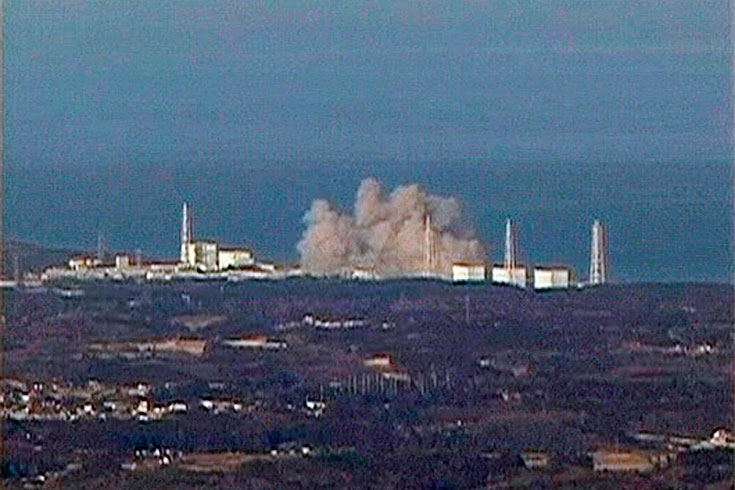
Fukushima Nuclear Plant explosion 2011
     After being rumbled by an earthquake then bashed by the ensuing tsunami in March 2011, Japan’s public approval of nuclear energy crumbled. All nuclear plants were closed for inspection to ensure that no structural damage occurred; however one plant in Fukushima, experienced damage to its cooling system which lead to a meltdown that rivaled that of Chernobyl. Nearly 500,000 people were evacuated to avoid radioactive contamination from the leaking plant and many areas are deemed inhabitable for many decades.

Chernobyl Nuclear Plant after catastrophic meltdown in 1986

    Even today, tens of thousands of people are still unable to return to their homes, refugees of a technological failure.  Japan, being in high demand for electricity and their main power source offline, turned to fossil fuels to help supply the country with electricity temporarily. Since the Fukushima disaster killed any of the little support for nuclear power, the Japanese government decided to slowly decommission nuclear power plants and slowly convert to other methods such as fossil fuels (since arc reactor technology hasn't been perfected). This increases utility costs for the people, but provides a safer living environment for the time being.

     For the complete story please visit:


Wednesday, September 11, 2013

"Chile" Temperatures and Snow Blanket South America


With the extra weight from heavy snow, homes are at risk of collapse.
July in Wisconsin is a place of soaring temperatures and sweltering humidity, but that’s not the case for residents of South America. Being in the southern hemisphere, the continent’s winter months are opposite ours making snow in July common place. This year is unusual since record snowfalls are being observed throughout most of South America and even being recorded in places in southern Bolivia.


 Nearly every province in Argentina recorded snowfall shocking residents. Temperatures as low as 29° F (-1.5 C) blasted Buenos Aries increasing risk of injury. Since locals are not accustomed to colder temperatures, frostbite and hypothermia risks are considerably higher. Massive snowfalls and bitterly cold winds make life in the Andes especially difficult since most residents are farmers. Livestock herds are being lost, roads and passes are being blocked with feet of snow preventing supply transportation, and houses are collapsing from heavy snow.   

For more information please visit: 

Monday, September 9, 2013

Poultry Packed Markets Lead to New Flu Strain

Chickens at a vendor's stand in live market

       The large populations and close quarters of chickens and ducks in Chinese markets are a breeding ground for influenza viruses. Viruses are common in the dense markets but are rarely transmitted to humans; however there is always a possibility for infection. In April, a new flu virus (H7N9) was contracted and since passed to 130 human handlers and killed at least 40 people. 

     The virus forms when passed from bird to bird, changing as necessary to survive and residing in the respiratory tract. Working closely though handling, humans contracted the virus. Medical professionals in China as well as commercial vendors suggest keeping clucks and quacks separate in the markets to prevent the development of viruses dangerous to human health. 

     For the full story, please go here to : New deadly flu launched by live bird markets